What Caused the Warring States Period
What caused the population to increase during the Warring States Period quizlet. O Better tools were used to increase the food supply.

A Brief History Of China Warring States
Although China is said to have over 5000 years of history it has only been considered a unified nation since 221BC.
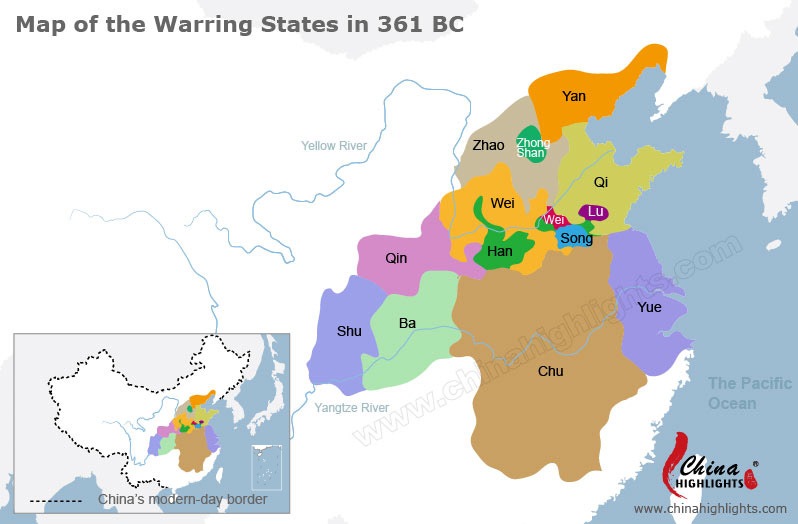
. Which significant developments contributed to these changes. Click to see full answer. The Warring States period is distinguished from the preceding age the Spring and Autumn Chunqiu period 770476 bce when the country was divided into many even smaller states.
The Warring States began when the vassal states of the Zhou dynasty successively declared independence. Confucianism Legalism and Daoism all each played a role during the Warring States Period. The Warring States Period 480 to 246 BCE or Era of Warring States saw lengthy civil wars among the various kingdoms and is the era in which The Art of War was written.
Who united the warring states. The Warring States Period occurred from 475 to 221 BC as Zhou China was divided into several warring kingdoms which vied for supremacy. Just before its unification however seven powerful states fought ruthlessly for hegemony in what would later become known as the Warring States period.
OSoldiers were hired from outside the empire for protection. What caused the Warring States Period. The Warring States Period lasted from 475 until 221 BCE.
The collapsing dynasty fractured into over one hundred small states who each claimed the Mandate of Heaven. The collapsing dynasty fractured into over one hundred small states who each claimed the Mandate of Heaven. Warring States Period 403 BC 221 BC was also the second half of the Eastern Zhou Dynasty 770 BC 256 BC when seven strong kingdoms engaged in merger wars and strengthened through reforms and expansion and the suzerain Zhou kept shrinking.
The Warring States began when the vassal states of the Zhou dynasty successively declared independence. The Warring States period Zhanguo 戰國 5th cent-221 BCE is the later part of the so-called Eastern Zhou period Dongzhou 東周 770-221 BCE. During this time the states of Wei Zhou Han and Qi were all viable.
By 334 BC there were 7 warring states. The text indicates that the ongoing warfare of the Warring States period 403-221 BCE was fueled by the greater availability of weaponry and the increased power of local authorities. What caused the population to increase during the Warring States period.
It was succeeded by the Qin Dynasty in 221 BC which marked the transition between ancient China and Imperial China. Qin Chu Zhao Wei Han Yan and Qi. In these intrigues two states Qin and Chu eventually emerged supreme.
The Partition of Jin known also as Three Families Partitioning Jin was an important point in the history of the Warring States Period as it resulted in the fall of the powerful state of Jin and the rise of the states of Han Wei and Zhao. The Warring States period in Ancient Chinese history--which followed the period known as Spring and Autumn 770-476 BC during the Chou Zhou Dynasty--ran from about 475-221 BCIt was a period of violence and chaos during which the philosopher Sun-Tzu is said to have lived and culture to have flourished. Conquered peoples were resettled in the empire.
This is due in large part to the Warring States. Sengoku Period period of warring states Japan The Sengoku Period in Japan from around 1493 or 1467 to around 1573 is a chronological period in the history of Japan that commenced from the Coup of Meio in 1493 or the Onin Disturbance in 1467 and ended by the disappearance of the Muromachi bakufu Japanese feudal government headed by a shogun with the purge of. The Warring States began when the vassal states of the Zhou dynasty successively declared independence.
There were seven states in China who all wanted to build an empire and they fought continually to accomplish this goal. The name Warring States is derived from an ancient work known as the Zhanguoce Intrigues of the Warring States. What caused the population to increase during the Warring States period.
Conquered peoples were resettled in the empire. While the Zhou emperor was the de jure ruler of China real power rested with the kings of the seven warring states and the land was in perpetual war until King Ying Zheng of Qin conquered Chu in 223 BC and founded the Qin dynasty as Qin. A Brief History of China.
Daoism influenced many elements of later Chinese philosophy especially Chinese Buddhism. What was the cause of the Warring States Period. 476 BC 221 BC.
Click to see full answer. O Cultural development convinced people to remain on their lands. The rule stayed stable for 200 years but eventually started to collapse with increasing local interests of more than 20 feudal lords creating the Warring States Period.
It occured after the barbarians attacked the capital and ransacked it resulting to financial weakness. The Wei and Zhou joined forces against the Han who sought assistance from the Qi in defense. The zhou king could no longer support a large army and lost the support and control of the fiefdoms or states who started fighting against each other.
The Sengoku period 戦国時代 Sengoku Jidai Warring States period was a period in Japanese history of near-constant civil war and social upheaval from 1467-1615. Better tools were used to increase the food supply. States declared independence from the Zhou Dynasty and kingdoms fought for territory during this period.
The Qin finally won. It is characterized by an increased centralisation and bureaucratisation within the regional states of the Zhou kingdom. The Sengoku period was initiated by the Ōnin War in 1467 which collapsed the feudal system of Japan under the Ashikaga Shogunate.
The period of the warring states happened during the Zhou dynasty. Simply so what caused the Warring States Period in the Zhou Dynasty. Soldiers were hired from outside the empire for protection.
These three philosophies influenced the styles of Chinese governance throughout the Qin ascendancy the Han dynasty and beyond becoming more or less influential depending on. The leaders originally ruled alongside the Shang dynasty but they took over. The intense contention and wars among these kingdoms led to the flourishing of technology literature philosophy reform.
When was Warring States Period. The collapsing dynasty fractured into over one hundred small states who each claimed the Mandate of Heaven. The Warring States Period was a time when the Han Wei and Zhao were three of the seven major states the others being Qin.

A Brief History Of China Warring States
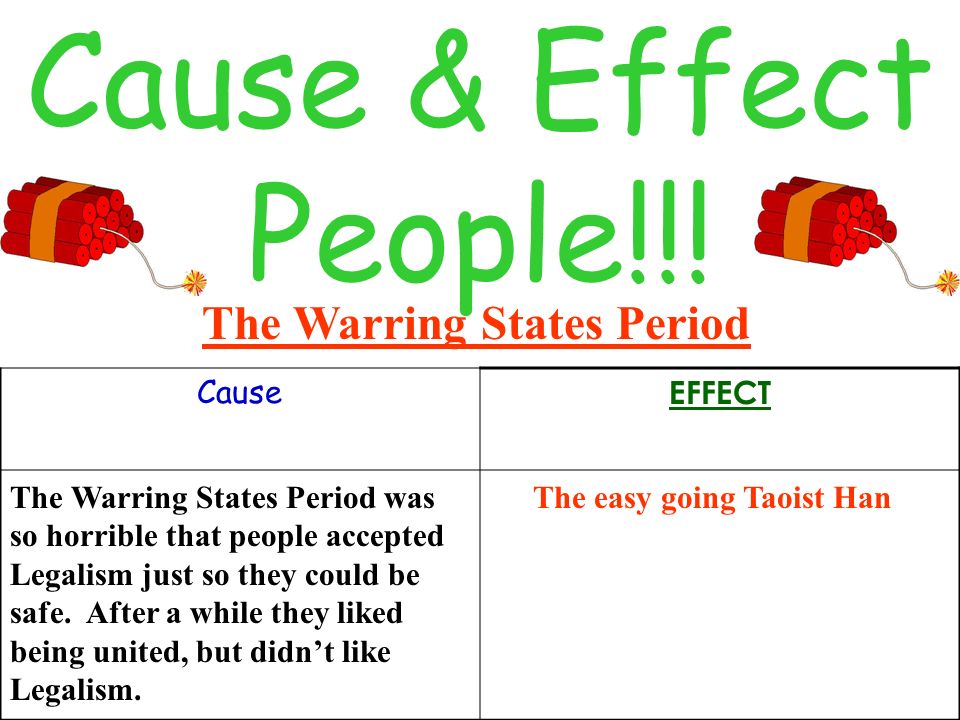
Cause Effect People Spring And Autumn Period Cause Effect Large Kingdoms Conquer Smaller Ones And Gain Power The Warring States Period Ppt Download
15 Facts About Warring States Period In China
Comments
Post a Comment